 English
 عربى
عربى Español
Ever wondered how surgeons perform such intricate, precise work on the tiny bones of the human body? While giant saws and drills might come to mind, much of orthopedics relies on surprisingly small, delicate, and specialized tools. One such instrument is the UBE Small Bending Bone Chisel—a mouthful for a device that plays a big role in modern surgery, especially in minimally invasive procedures.
Understanding the UBE in the Tool’s Name
The “UBE” in the name stands for Unilateral Biportal Endoscopy. This refers to a cutting-edge minimally invasive surgical technique primarily used for spinal procedures, such as treating herniated discs or spinal stenosis.
In traditional open surgery, a large incision is made to give the surgeon a clear view and plenty of space. UBE, however, uses two small incisions (or portals):
- Working Portal: Used to insert the specialized surgical instruments, like the small bending bone chisel.
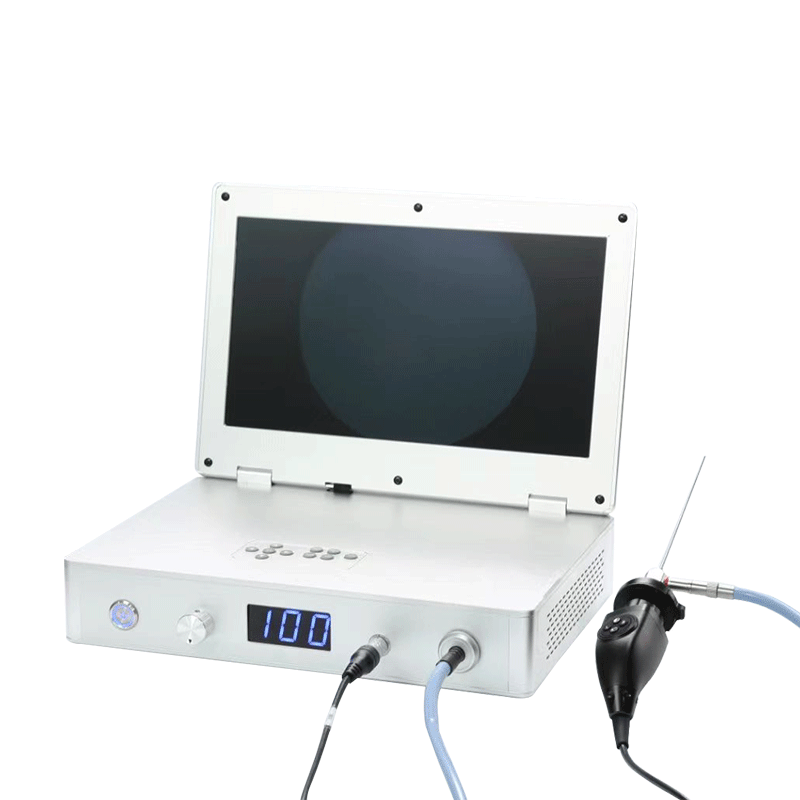
- Viewing Portal: Used to insert an endoscope (a tiny camera) that projects a magnified, high-definition view onto a monitor, guiding the surgeon’s every move.
This technique is revolutionary because it causes less damage to surrounding muscles and tissues, leading to less pain, smaller scars, and a faster recovery time for the patient.
What Makes This Chisel So Special?
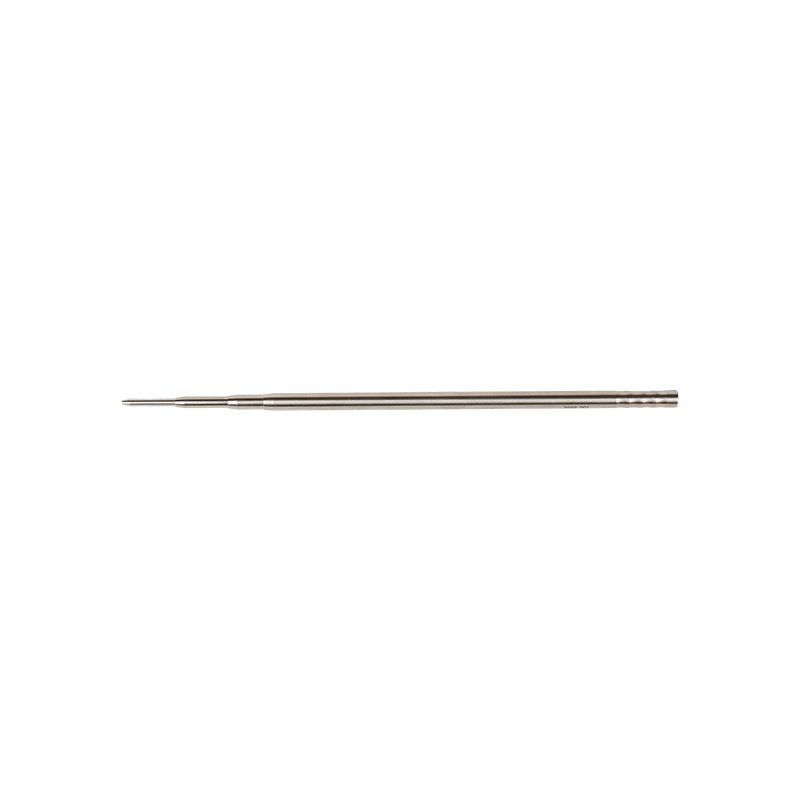
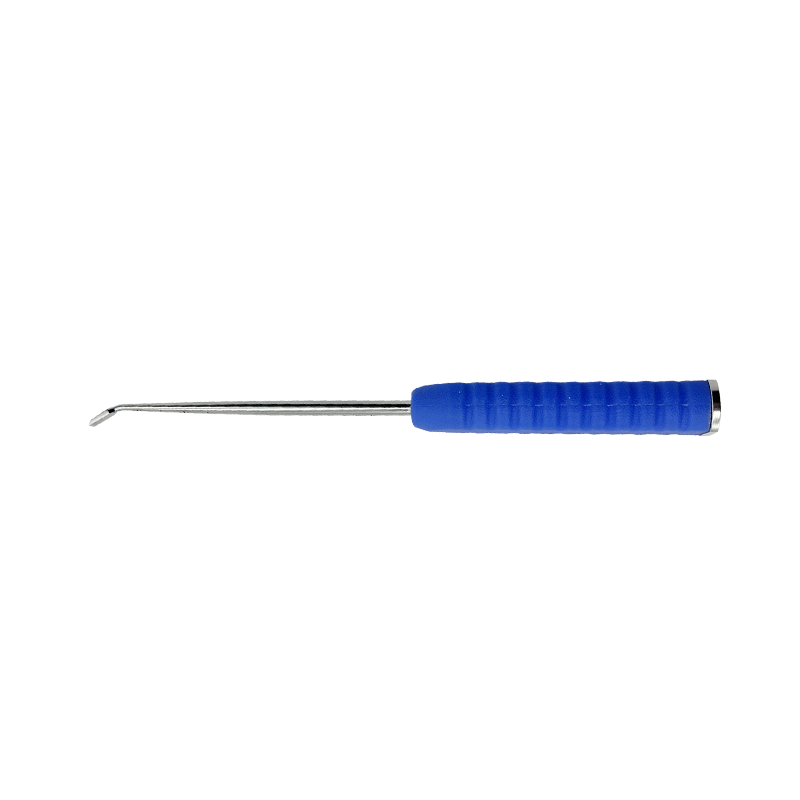
The UBE Small Bending Bone Chisel isn’t your average woodworking tool. It’s a high-precision instrument designed to perform a very specific task: carefully shaving, separating, or removing small pieces of bone during a minimally invasive procedure, often deep within the body.
Here are its key features:
- Small Size: Designed to fit through the narrow working portal, making it essential for UBE and other minimally invasive surgeries. Its small tip allows for incredible precision in tight spaces.
- Bending/Angled Tip: This is perhaps its most defining feature. Unlike a straight chisel, the tip is often slightly curved or angled. This geometry allows the surgeon to reach around corners, underneath structures, or into deep recesses that a straight tool simply couldn’t access. This is crucial for undercutting or removing bone spurs (osteophytes) from the underside of a joint or vertebra without needing to remove the entire structure above it.
- Sharp, Durable Edge: The chisel tip must be sharp enough to cut through dense bone tissue cleanly, yet durable enough to maintain its edge throughout the procedure. They are typically made from high-grade surgical stainless steel or titanium alloys.
- Controlled Force: The design ensures that the surgeon can exert a measured, controlled force. This is vital because the bone structures being worked on, particularly in the spine, are often close to sensitive nerves and blood vessels.
Precision in Action: When is it Used?
The small bending bone chisel is a critical instrument in spinal decompression surgery, where bone often needs to be removed to relieve pressure on compressed nerves.
| Procedure | Goal of the Chisel |
|---|---|
| Laminectomy/Laminotomy | Removing a small part of the lamina (the back arch of a vertebra) to access the spinal canal. |
| Foraminotomy | Widening the foramen (the opening where a nerve root exits the spine) to relieve pressure caused by bone spurs or disc material. |
| Osteophyte Removal | Shaving off small, abnormal bone growths (spurs) that might be irritating a nerve or restricting joint movement. |
How Does a Surgeon Use a Chisel on Bone?
It may seem old-fashioned, but chisels are incredibly effective for controlled bone removal. The surgeon doesn’t typically swing or hammer the chisel like a carpenter. Instead, they often use a combination of techniques, depending on the bone structure:
- Tapping: Using a small, specialized surgical mallet or hammer to gently tap the chisel handle, driving the tip through the bone in a very controlled manner.
- Pivoting and Shaving: Using the chisel to gently scrape or shave thin layers of bone, much like a tiny plane or sculptor’s tool, allowing for fine-tuning of the decompression area.
The use of the UBE Small Bending Bone Chisel epitomizes the goal of modern surgery: maximum result with minimum invasion. It allows surgeons to be highly effective while being incredibly respectful of the patient’s anatomy, speeding up recovery and improving surgical outcomes.